
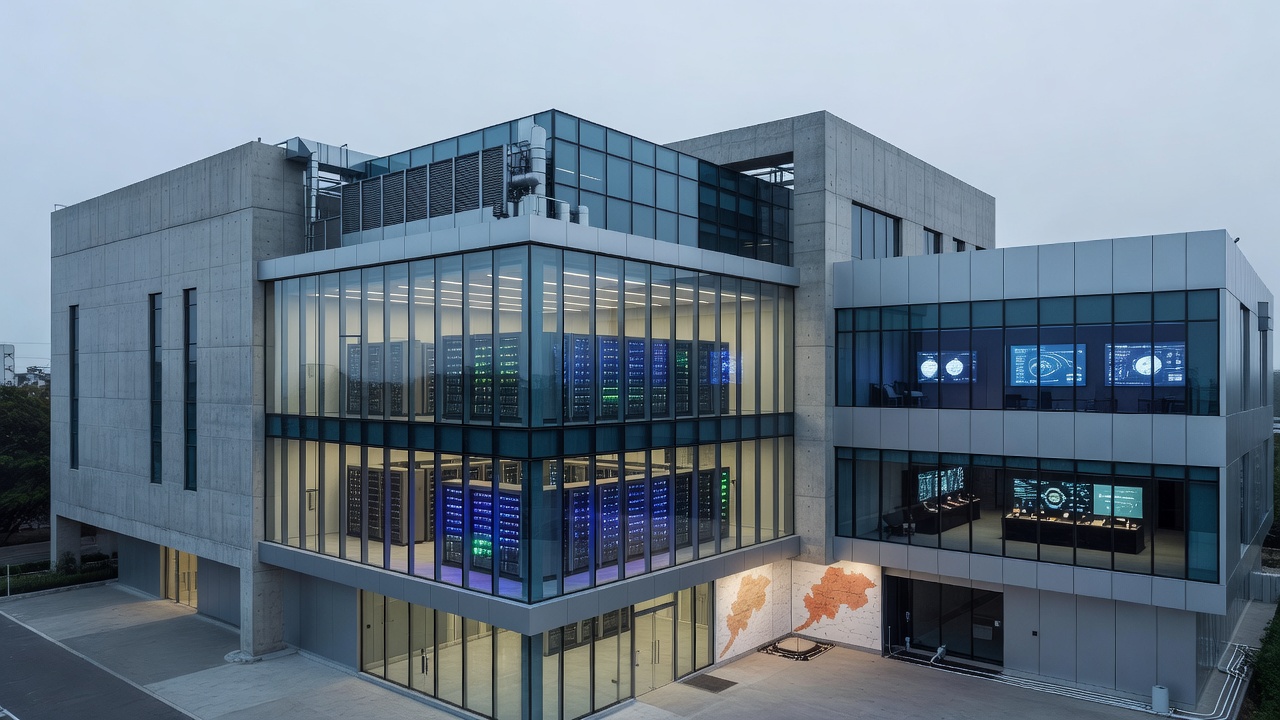
The Reserve Bank of India has inaugurated a new sovereign data centre and cybersecurity training institute in Bhubaneswar, built at a cost of ₹169 crore across 18.55 acres. The facility, located at Info Valley-II in Jatni, is designed to back up core settlement systems such as RTGS, NEFT and UPI clearing, giving the central bank an independent, disaster-resistant base for critical banking infrastructure.
What the facility actually does
A data centre is essentially a secured building full of servers, storage systems and network equipment that keeps digital services running around the clock, with constant power, cooling and connectivity. Every time a bank transfer is processed or an account balance is checked, servers somewhere are doing that work. The RBI's new site in Bhubaneswar will host core application workloads and settlement databases, acting as a disaster-recovery backup to the central bank's main data centre in Navi Mumbai. If the Mumbai facility were ever disrupted by a natural disaster or major technical failure, the Odisha site is meant to keep interbank payment systems operating.
Why it matters for ordinary bank customers
The centre does not touch individual savings accounts or login credentials directly - those remain with commercial banks. Instead, it secures the central plumbing that moves money between banks: RTGS for high-value transfers, NEFT for batch transactions settled every half hour, and the backend settlement layer behind UPI, which is otherwise run on the front end by the National Payments Corporation of India. "The data centre will help ensure that payments keep running during outages, data stays secure and within the country, and that recovery is fast if something goes wrong," said Mahesh Shukla, Founder and CEO of PayMe. Importantly, the facility cannot prevent every UPI failure, since many outages originate at commercial banks, payment apps or telecom networks rather than at the RBI's own systems.
Sovereignty and security design
Odisha was chosen partly for its geographic stability, away from major seismic zones and border-sensitive areas. Rather than relying on commercial cloud providers, which expose institutions to vendor lock-in, global outage risk and potential foreign data access, the RBI opted for a dedicated Tier-IV facility under direct regulatory control. The site includes hardware encryption for transaction data, synchronized disaster-recovery backups, and defenses against distributed denial-of-service attacks. An adjacent Cybersecurity Training Institute will also train banking-sector IT staff and study emerging threats, including AI-driven fraud techniques, to update security protocols across Indian commercial banks.
What this does not solve
Government treasury operations, tax collections, pension payments and sovereign debt settlements will also run through the new facility, alongside daily interbank clearing. Still, the project addresses systemic resilience rather than every point of failure in India's payments ecosystem - app-level bugs, bank-side server issues and network congestion at the retail level remain outside the data centre's direct control.