
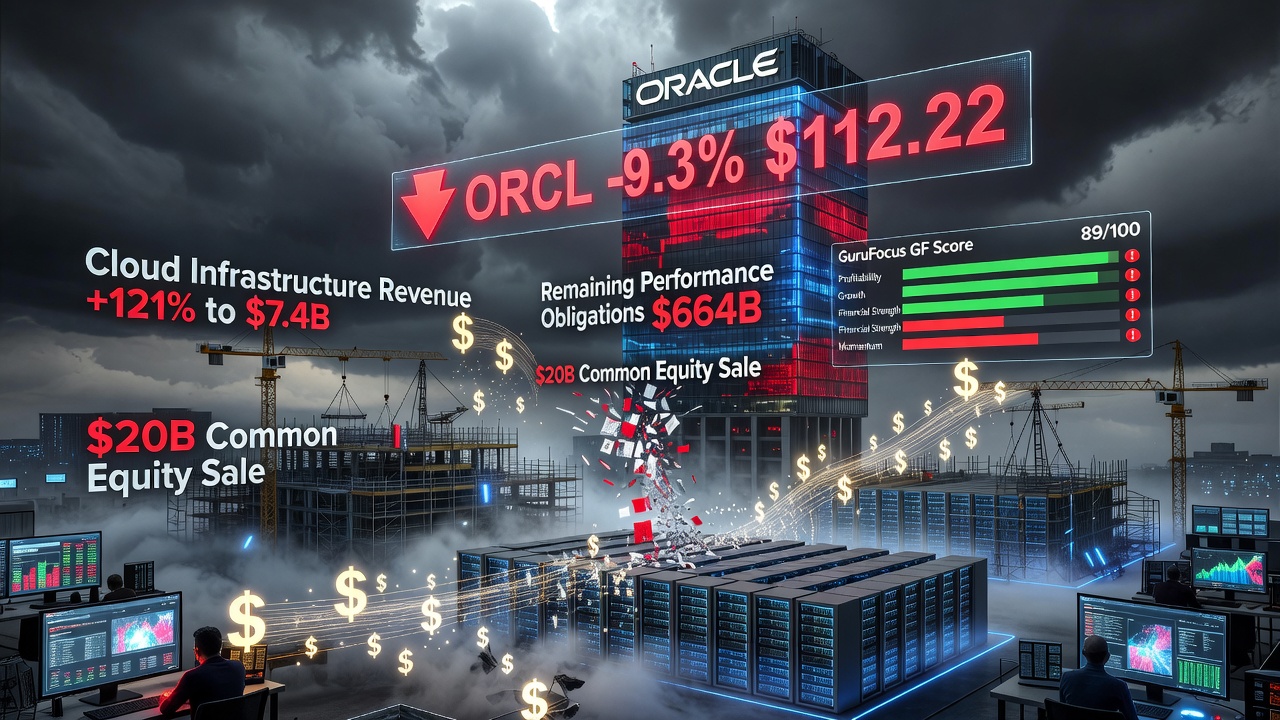
Oracle (ORCL) shares fell 9.3% to $112.22 by mid-morning trading on November 5, as investors grew more skeptical about how the company plans to finance its aggressive cloud and AI infrastructure buildout. The sell-off reflects a broader market reassessment of whether Oracle's massive contracted revenue can be converted into cash fast enough to justify the capital outlay.
Strong Demand, Steep Costs
Oracle's September 10 earnings report showed fiscal first-quarter revenue of $19.3 billion, with cloud infrastructure revenue surging 121% year-over-year to $7.4 billion-now about 38% of total sales. The company's remaining performance obligations, a measure of contracted but not-yet-recognized business, reached $664 billion, signaling enormous future demand. But turning those commitments into delivered services requires building out data center capacity, a process that takes time and capital.
Equity Sales Raise Dilution Concerns
To help fund its expansion, Oracle completed $20 billion in common-equity sales during the quarter. While this strengthens the company's balance sheet for capital investment, it also increases the total share count, spreading future earnings across a larger base. That dilution effect is one reason investors are weighing growth metrics against financing costs more carefully than in prior quarters.
What the Data Shows
A GuruFocus assessment gives Oracle a GF Score of 89 out of 100, with particularly strong marks for profitability and growth. However, the same analysis flags weaker financial strength and momentum readings, along with four severe warning signs that merit investor attention. This mixed picture-robust demand paired with execution and funding risk-appears to be driving the stock's volatility.
The Execution Test Ahead
For Oracle, the near-term challenge is less about demand and more about delivery: how quickly it can bring new data center capacity online, convert its backlog into recognized revenue, and manage additional funding needs without further diluting shareholders. Strong contracted demand provides a foundation, but the pace of infrastructure deployment and cash generation will ultimately determine whether the company's heavy spending produces a return.