
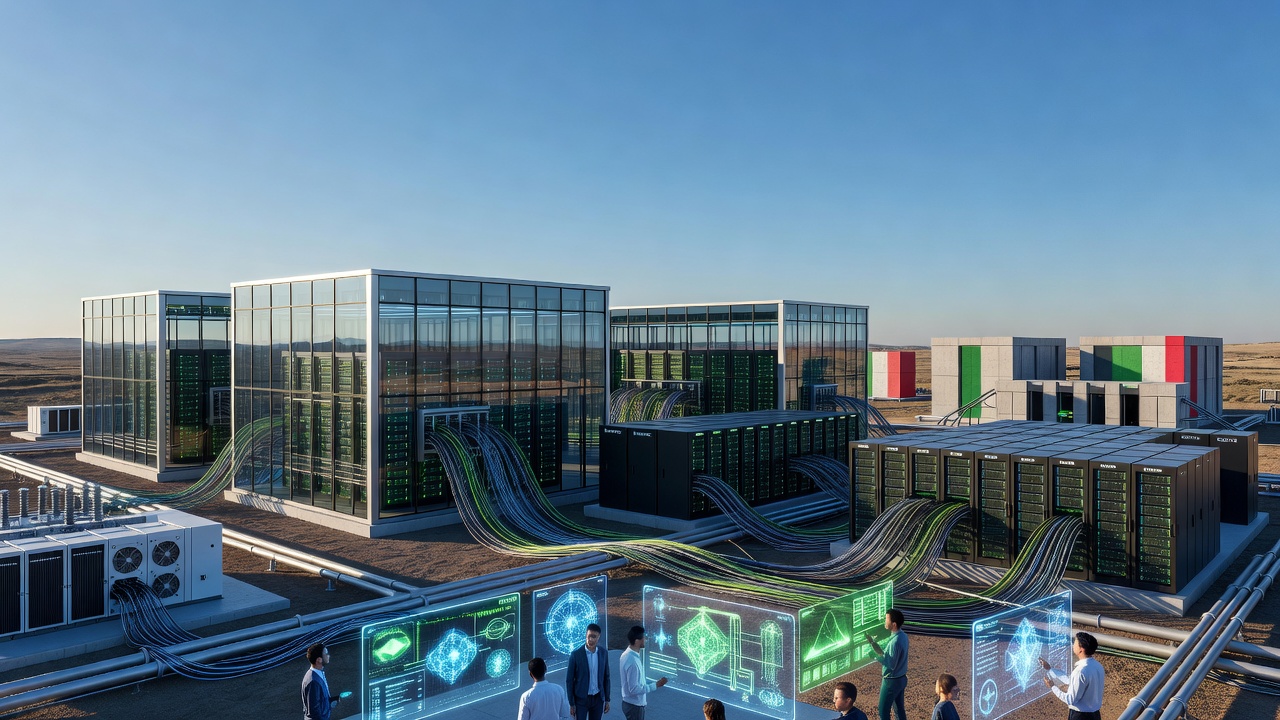
Infrastructure developer Fermaca has secured designation as Mexico's first NVIDIA Cloud Partner, a status that pairs the company's energy and telecommunications background with NVIDIA's accelerated-computing hardware. The partnership launches a phased "AI factory" platform intended to give Mexican and Latin American businesses, universities, and government agencies access to large-scale computing resources for building custom AI models.
What the partnership actually involves
Fermaca has spent years developing natural-gas pipelines, power generation, and fiber-optic networks across Mexico, giving it existing physical infrastructure that AI data centers require: reliable energy supply and high-speed connectivity. The new initiative, branded Fermaca Digital Origins and based in Mexico City, combines that infrastructure base with NVIDIA's computing architecture. The first phase centers on an initial computing cluster built with NVIDIA hardware, supported by server manufacturer Inventec and storage systems from DDN, a company that specializes in high-performance data storage for AI workloads.
Why local infrastructure matters for AI
Training and running AI models requires enormous amounts of electricity, cooling, and fast data movement between processors and storage. By locating this capacity inside Mexico rather than relying solely on cloud providers abroad, the platform is positioned to let companies and researchers work with proprietary data without routing it through foreign data centers - a point the companies describe as supporting "digital sovereignty." That term generally refers to keeping data processing and storage within national borders to meet local regulatory, privacy, or strategic preferences, though specifics of Fermaca's data-handling policies were not detailed in the announcement.
Training component and open questions
Alongside the hardware buildout, the initiative includes an academic training program aimed at university faculty and data engineers, intended to build local expertise in data engineering and accelerated computing - skills needed to actually operate and maintain AI infrastructure once it exists. This addresses a common bottleneck in AI deployment: physical hardware is only useful if enough trained personnel can manage it.
The announcement does not specify a public timeline for subsequent phases, total investment figures, or which enterprises and institutions will be the platform's first customers. As with any newly announced infrastructure project, the practical impact will depend on execution details - including capacity, pricing, and access terms - that have not yet been disclosed.